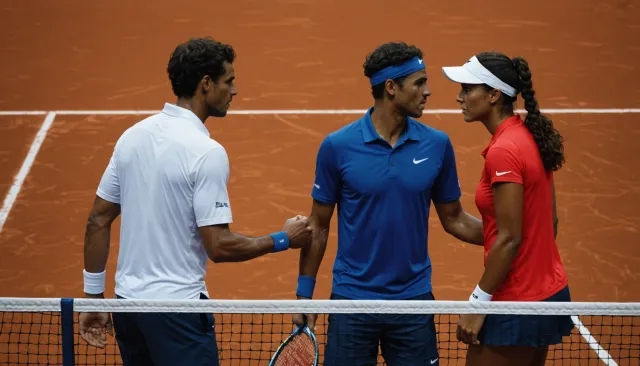
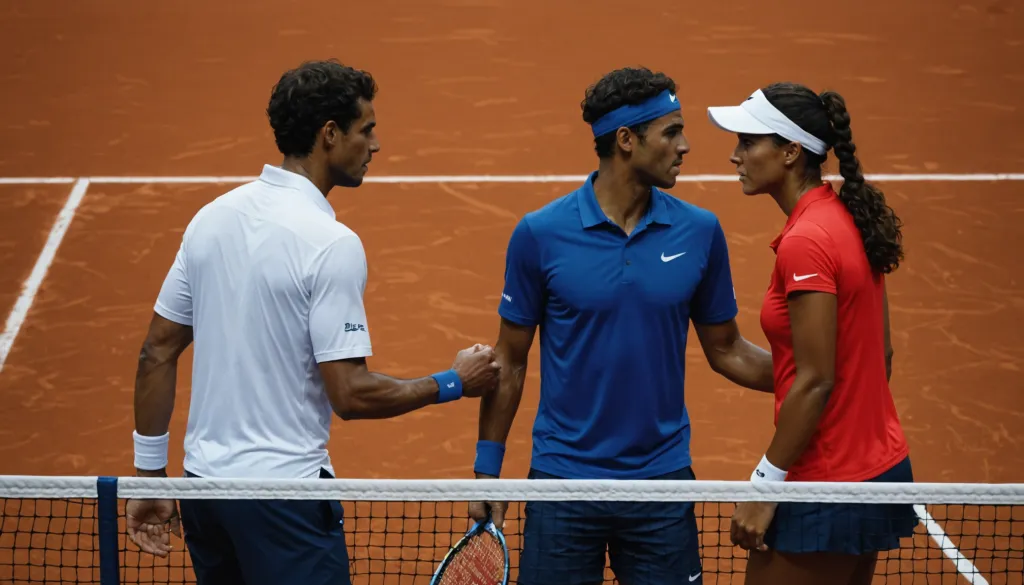
The first week of the US Open opens a new chapter for one of tennis's most anticipated pairings, as Serena Williams and Carlos Alcaraz step onto the court together in mixed doubles at the USTA Billie Jean King National Tennis Center. The event, running from August 23 through September 13, marks the second-oldest Grand Slam competition after Wimbledon, and this year's early rounds carry unusual star power thanks to a mixed doubles field stacked with singles headliners.
Also drawing attention on this opening day is the top-seeded pairing of Aryna Sabalenka and Novak Djokovic, while qualifying rounds for the men's and women's singles draws continue in parallel. For viewers outside the United States hoping to follow the action live, geographic restrictions on streaming rights remain a persistent obstacle, one that has pushed many toward VPN tools as a practical workaround, similar to how some rely on a vpn for prime video to unlock region-specific sports and entertainment coverage. vpn for prime video
Why Streaming Access Has Become a Technical Puzzle
ESPN holds exclusive broadcast rights to the US Open, meaning cable-free viewers need a streaming subscription that includes the network's sports package. Options range from DirecTV's base tier and standalone ESPN Unlimited access to bundled services like Fubo, Sling, and YouTube TV, each pricing sports content differently depending on the plan tier. This fragmented landscape reflects a broader shift in how media rights are licensed: broadcasters increasingly sell regional exclusivity, which means the same competition can be available on entirely different platforms depending on a viewer's location.
That regional exclusivity is precisely where virtual private networks enter the conversation. A VPN encrypts a user's internet traffic and routes it through a server in another location, which can make it appear as though the connection originates from a different country. This is not a workaround unique to tennis; it is a common method for reaching content libraries, news coverage, or live events that are otherwise geo-blocked. The trade-off is that streaming platforms actively detect and block known VPN server addresses, so reliability varies by provider and server load.
Privacy Trade-Offs Behind a Simple Convenience
Beyond unlocking content, VPN use carries genuine privacy implications worth understanding. Tunneling protocols encrypt data between a device and the VPN server, shielding browsing activity from local network operators and internet service providers. However, the VPN provider itself becomes a trusted intermediary, which is why logging policies and the jurisdiction in which a company operates matter enormously. A provider based in a country with weak data protection law, or one that retains connection logs, can undermine the very privacy the tool claims to offer.
A Field Built on Legacy and New Talent
The competition draw itself carries historical weight. Seventeen former Grand Slam singles champions are entered this year, including Jannik Sinner, Alexander Zverev, Carlos Alcaraz, and Novak Djokovic on the men's side, alongside Aryna Sabalenka, Elena Rybakina, and Jessica Pegula among the women. The United States fields 28 competitors in the main singles draw, the largest contingent of any nation, featuring Coco Gauff, Amanda Anisimova, Ben Shelton, and Taylor Fritz. Alongside the formal draw, exhibition and rising-talent events scheduled for August 25 and 27 offer a bridge between tennis's past and its next generation.